


National Geographic 1991 January
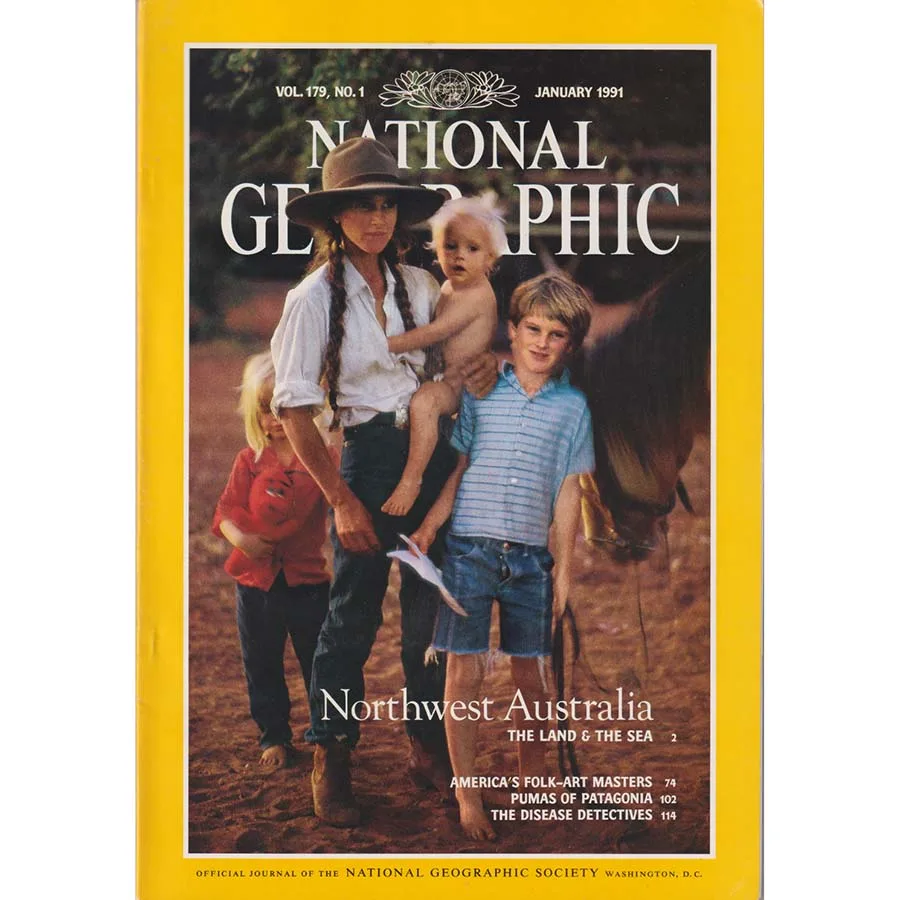
Publisher: National Geographic
Format: Paperback
ISBN: none
National Geographic, January 1991: the issue that turns up like a sunburnt postcard from the edge of the map and says, “Happy New Year. Would you like your optimism served with red dirt, big skies, and a gentle reminder that nature is vastly indifferent to your plans?”
The cover story is Northwest Australia: The Land & the Sea, and the photo is pure lived-in outback energy: a woman in a broad hat, kids at her side, a horse nosing into frame like it owns the magazine, and that unmistakable ochre ground that looks less like “soil” and more like the planet’s original paint. It’s the kind of image that smells faintly of dust, sunlight, and hard work. You can practically hear flies having opinions.
Inside, expect National Geographic doing what it does best: stretching a place out into full dimension. Not just “Australia = kangaroos and one opera house,” but the north-west as a vast, harsh, astonishing meeting-point of coast and interior—tides, reefs, storms, heat, cattle stations, long distances, and communities that exist because humans are stubborn and occasionally heroic. It’s landscape as character: beautiful, punishing, and quietly magnificent. The irony is that the New Year’s issue isn’t about fresh starts so much as it’s about enduring—about places that don’t reset on January 1st because the dry season does not care about your calendar.
And then, because Nat Geo can never resist a globe-spinning buffet, you get three more very different flavours of wonder:
-
America’s Folk-Art Masters – proof that “exploration” can mean walking into a workshop, a barn, a back room, and finding entire universes made by hand. Less pith helmet, more paint-splattered genius. The kind of feature that makes you want to start carving a duck decoy and immediately accept you lack the required magic.
-
Pumas of Patagonia – sleek, silent predators in a landscape that looks like it was designed to test hikers for sport. Expect wind, drama, and the faint sense that the puma is watching you read the article and judging your posture.
-
The Disease Detectives – the least glamorous and most important adventure: scientists and epidemiologists chasing outbreaks, tracing clues, and doing the sort of work that only becomes “exciting” after the fact, when you realise how close things can get. It’s the ultimate Nat Geo twist: the real monsters are microscopic and the heroes carry clipboards.
Condition: Good, which is perfect for a 1991 issue: sturdy, readable, and full of that classic pre-internet heft—long articles, serious photography, and a tone that assumes you’re happy to spend an evening wandering from the Australian coast to American folk art to Patagonian predators to labs and field reports. Sold by Crappy Old Books, naturally, because the best way to start 1991 is with a slightly timeworn yellow-bordered portal that still opens cleanly into big landscapes and bigger stories.
If you want a National Geographic that feels like a proper “new year, new world” reset—January 1991 delivers. It’s warm dust and wide horizons, with a side of art, apex cats, and the people who hunt the invisible. A surprisingly perfect way to begin.
Keep browsing: See more National Geographic books Other books by National Geographic
